UPS Repair
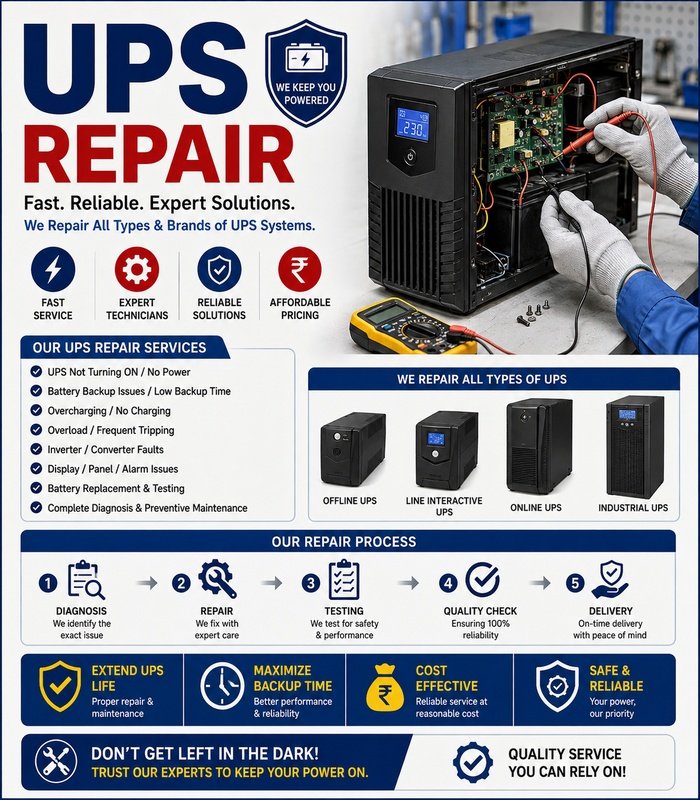
UPS repair involves diagnosing and servicing an Uninterruptible Power Supply that is not providing reliable backup power, charging correctly, or protecting connected equipment. A UPS can help keep computers, networking devices, CCTV systems, and other equipment operating during short power interruptions.
Because UPS units contain batteries and electrical components, troubleshooting should be performed carefully, with internal electrical repairs handled by qualified technicians.
Common UPS Problems
A UPS may develop different symptoms depending on the failed component or operating condition. Common problems include:
- UPS not turning on
- Battery not charging
- Short backup time
- Frequent alarms
- Unexpected shutdowns
- Overload warnings
- Fault indicators
- Output power failure
- Excessive heat
- Unusual noises
The first step is to identify the exact symptom and check whether the problem occurs on mains power, battery mode, or both.
Basic UPS Diagnostics
Start with a visual inspection. Check the power cable, input connection, output sockets, indicator lights, display messages, and external condition of the unit.
Verify that the UPS is receiving mains power and that the connected load is within its rated capacity.
If the UPS is overloaded, disconnect unnecessary equipment and check whether normal operation returns.
Battery Inspection
The battery is one of the most common components responsible for UPS problems. Rechargeable UPS batteries gradually lose capacity as they age.
A weak battery may cause:
- Very short backup time
- Frequent low-battery warnings
- Failure to start during a power outage
- Battery-related alarms
- Unexpected shutdowns
Battery condition should be tested using appropriate equipment. Swollen, leaking, cracked, or otherwise damaged batteries should not be used.
Charging System Check
If the UPS operates from mains power but the battery does not charge, the problem may involve the charging circuit, battery, internal fuse, wiring, or control electronics.
A technician can test the charging system and determine whether the battery or another internal component needs attention.
Output and Inverter Inspection
The inverter converts stored battery energy into usable output power when mains electricity is unavailable.
If the UPS switches to battery mode but connected equipment loses power, the inverter, battery, control circuitry, or output section may require further diagnosis.
Internal electrical testing should only be performed by appropriately trained personnel.
UPS Overload
An overloaded UPS may continuously alarm, shut down, or refuse to provide normal backup power.
Check the total power requirements of connected equipment and compare them with the UPS’s rated capacity. High-power devices should not be connected simply because there is an available socket.
Cooling and Physical Inspection
UPS equipment can generate heat during operation. Inspect ventilation openings and cooling fans for dust or obstruction.
Also check for:
- Burn marks
- Damaged cables
- Loose connections
- Swollen batteries
- Corrosion
- Unusual odors
- Excessive heat
- Unusual buzzing or clicking
A burning smell or visible electrical damage should be treated as a serious warning.
Testing Backup Operation
After servicing, the UPS should be tested under controlled conditions. Verify that it charges correctly, switches to battery mode when required, provides stable output, and returns to normal mains operation.
The backup duration should also be evaluated when appropriate.
Connected equipment should be protected during testing, and testing should follow the manufacturer’s recommended procedure.
When Professional Repair Is Required
Some UPS faults cannot be safely resolved through basic troubleshooting. Problems involving the inverter, charging circuit, capacitors, control board, internal wiring, or other electrical components require appropriate technical knowledge and equipment.
Do not open a UPS or attempt component-level electrical repairs unless you are qualified to work safely with the equipment.
Maintaining UPS Reliability
Regular inspection, battery testing, cleaning, load management, and timely battery replacement can extend UPS service life. Keeping the UPS within its rated load and operating environment also helps prevent unnecessary stress.
Proper UPS repair and maintenance can restore dependable backup power and help protect connected equipment from interruptions. When a fault involves internal electrical components or a damaged battery, professional servicing is the safest approach.









Reviews
There are no reviews yet.